Sometimes the shift is visible.
A person walks into a first session carrying loss in their posture. The eyes look tired. Shoulders slightly forward. Language shaped by disappointment. There is a quiet thread of self-criticism woven through almost every sentence.
Not dramatic. Just steady.
Many people begin therapy wanting relief from pain. Fewer realize how deeply they have internalized a story about themselves.
“I’m too much.”
“I’m not enough.”
“I ruin things.”
“I don’t deserve better.”
Those stories do not disappear in a session or two. They loosen slowly. They are challenged. They are examined. They are grieved.
At the beginning, hope can feel theoretical. Something the therapist holds more easily than the client.
But over time, something subtle begins to reorganize.
The posture shifts.
The language softens.
The eyes look up more often.
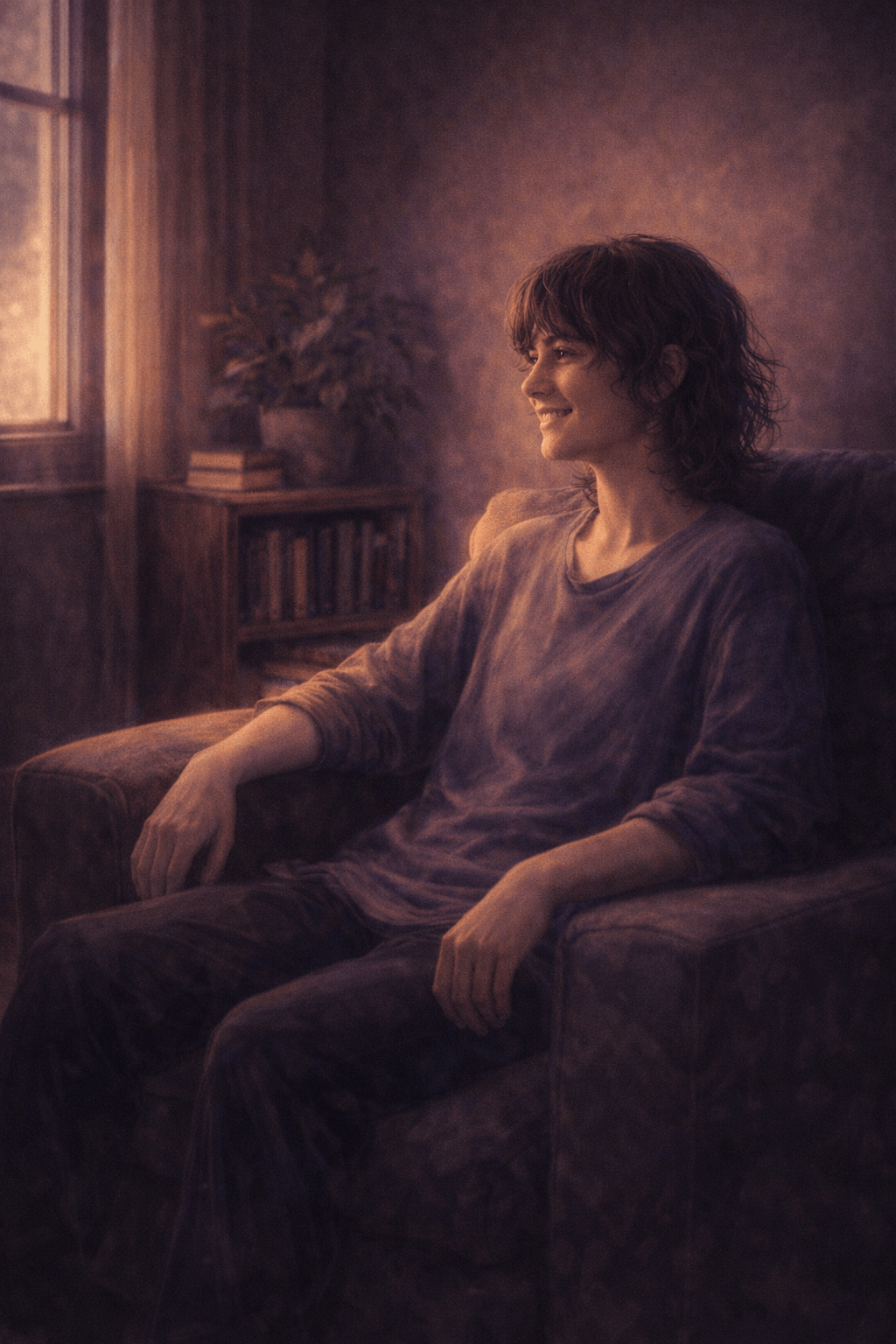
One day, a person walks into the room differently.
The sadness that once sat heavily in their expression has made space for something else. Not forced positivity. Not denial. Something steadier.
Joy.
Not the loud kind that tries to convince anyone.
The kind that is embodied.
When that happens, it does not feel like a performance milestone. It feels simple. Clean. Earned.
There is no dramatic declaration of self-love required. No grand statement about being healed.
There is just ease.
And ease is profound.
The most powerful moments in therapy are rarely the ones filled with insight. They are the ones where a person inhabits themselves differently without announcing it.
They laugh more freely.
They take up space without apology.
They speak about themselves without contempt.
Change is not always fireworks.
Sometimes it is the absence of self-hatred.
Sometimes it is the quiet replacement of shame with self-respect.
The privilege of this work is not in fixing anyone.
It is in witnessing someone remember who they are when they are no longer fighting themselves.
That kind of happiness does not need to be narrated.
It radiates on its own.
Embracing Shadows, Illuminating Hope,
Chelsey Fjeldheim, LCSW
Empowering Souls on the Path of Healing
Copyright © 2026 Chelsey Fjeldheim, Courage Speaks Counseling